TL;DR
This post explores why brand visibility alone is not enough to measure success in AI search and why PR teams must pay closer attention to how AI platforms describe, evaluate, and recommend brands. Drawing on new Muck Rack research, it examines the growing influence of third party sources, the differences between citations and AI generated answers, and the importance of measuring accuracy, favorability, and reputation alongside visibility. It also explores Muck Rack’s new Generative Pulse platform and its approach to measuring brand portrayal. As AI increasingly shapes how consumers discover and evaluate companies, understanding these narratives can help PR teams identify reputation risks, strengthen trust, and make more informed communication decisions.
Brand visibility and AI search are metrics that get everyone excited. But a growing disconnect exists between the hype and what brands actually need to understand.
If you have a background in SEO or content marketing, brand visibility probably means something very different than it does for someone responsible for a brand’s reputation. Your priority is probably focused on whether your website is being cited and where it ranks.
The issue with that approach is that a brand can have high visibility in citations, but the answer could still damage the brand’s reputation.
PR pros should view brand visibility as a starting point in a highly complex layer of how engines generate responses. I’ve said this in previous posts: every answer is unique, and they differ across platforms based on how they were trained, where they get their information, and the context of the person searching.
I’m not saying to ignore brand visibility as a metric. The challenge is when it becomes the primary measure of success. If you’re not paying enough attention to what the engines say and how they’re contextualizing your brand, you may find yourself in a situation where AI repeats messages that hurt your reputation.
PR teams need to treat AI search as a stakeholder.
Citations and Answers Tell Two Different Stories
One complication of measuring AI search is that citations and answers can tell very different stories about your brand.
As you know, AI answers are software interpretations based on what it finds as it scrapes the internet. A brand can appear in answers without being cited, or be cited without appearing in answers.
For example, let’s say a company publishes a primary research study, and it’s cited in the AI responses about industry trends. Still, the company itself is never mentioned in the answer. From an SEO perspective, that’s a win. The content was discovered and referenced. From a PR perspective, the reader may have no idea which company produced the research.
The opposite is also true. Your company can get mentioned prominently in an answer, but the AI relies entirely on independent sources to describe it. We can’t forget that in some of the AI engines, one answer can yield 15 or 20 citations from the media, analyst research, customer and product reviews, Reddit, etc.
In this scenario, your brand has visibility, but the information informing its portrayal sits largely outside your direct control.
The latest What Is AI Reading? report from Muck Rack, released October 28, 2026, illustrates how important third-party sources are to your brand.
The report shows more than 84% of citations come from earned and third-party sources, including articles, government websites, academic research, encyclopedic content, and other companies’ websites. Owned media accounted for 15.2%, up from 13.7% in May, while paid and advertorial content represented only 0.3%.
These are unbranded/category-related prompts. The story certainly changes when consumers already know who you are and they’re searching for more information about your brand.
There’s an important distinction in those numbers. The 84% figure includes a broad range of third-party material, much of which falls outside traditional earned media. Journalism alone accounted for 22% of citations in September, down from 27% in May. That suggests brands need to understand the broader ecosystem beyond news coverage. The reality is that even with great coverage all around, it doesn’t necessarily mean positivity and tonality will translate into the answer.
There’s something else to consider. A citation confirms that a particular source was linked to an answer, but it doesn’t establish how much of it influences the interpretation. You can certainly run tests and start to diagnose citation influence, but that may be a post for another day.
That’s why measuring citations alongside the actual language of AI answers provides a more useful picture of brand performance.
From brand visibility to customer belief
Brand visibility tells you whether your brand appears in the AI answer. What you really want to know is whether that answer improves your reputation or hurts it.
Here’s another way to think about measuring AI search. Think of it through three connected dimensions: visibility, portrayal, and belief.
- Visibility shows whether your brand appears in an answer and how often it does across relevant questions.
- Portrayal examines the answer itself, including the language, evaluations, factual claims, recommendations, and narratives associated with your company.
- Belief concerns what people ultimately understand or conclude after encountering that information.
These dimensions connect in ways most people don’t realize.
A positive brand mention in an AI answer doesn’t guarantee a shift in perception. It’s all about context and personal experience. Consumers bring unique preferences, past encounters with your brand, and skepticism to everything.
The same AI response can reinforce trust for one person and trigger doubt in another. Interpretation is personal, and no amount of visibility metrics can account for that.
You also can’t assume that an AI response accurately predicts what someone believes. That requires additional “believable” evidence to reinforce that belief. This includes surveys, reputation tracking, or research that tests how exposure to particular answers influences perception.
Portrayal gives PR teams something they can observe and analyze directly. It reveals the narrative and context being presented to audiences, even when their subsequent reactions remain unknown.
Most AI search pools still speak fluent SEO
There’s a reason why we haven’t moved beyond brand visibility as a core metric. Across the GEO measurement tech stack, most platforms today use SEO positioning and measurement frameworks to differentiate their products.
The problem is that they’re all saying the same thing, and that’s understandable. SEO teams were among the first to recognize the need to track how brands appear in generative search. They already had established workflows for monitoring rankings, citations, search visibility, and competitive performance.
I’m not criticizing these metrics because they do have legitimate value. If you’re a DTC brand and own revenue, visibility should be a priority metric. But PR teams are responsible for a different set of business outcomes.
Outside of storytelling and traditional media relations, they also have to focus on reputation, trust, credibility, and how a company’s actions are interpreted by different stakeholders. These are just as important to business impact as revenue loss.
Understanding context up-levels your game
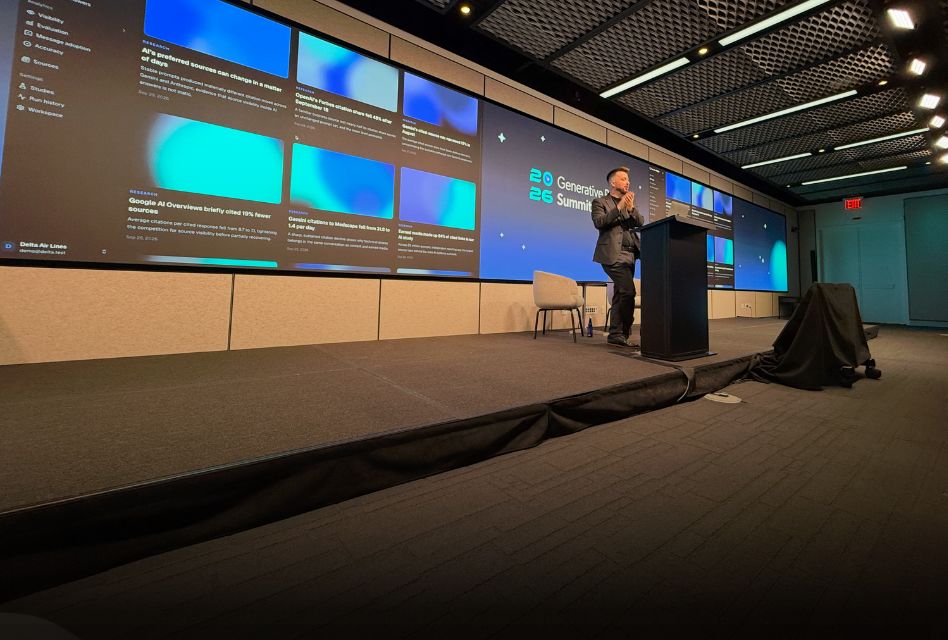
This distinction came up last week at Muckrack’s Generative Pulse Summit in New York. I joined longtime friend and previous colleague Steve Rubel for a panel discussion about KPIs and measurement in AI search.
We started by talking about how brands should establish benchmarks. While brand visibility was a natural talking point, the conversation quickly moved into areas much more familiar to PR and comms pros.
We went off on a few tangents talking about tonality, favorability, and reputation, and how those dimensions could be measured within AI-generated answers.
Tonality is an interesting dimension because it helps characterize the language that AI uses when describing a brand. An answer might be cautious, critical, enthusiastic, or matter-of-fact, and those differences can influence how the information is interpreted and believed.
Favorability adds another critical dimension. I think it’s important to mention that these AI engines have their own personalities and biases. Developers and engineers train them with data created or developed by people with bias. So, interpretations can be positive or negative, even if they’re not intended to be.
Reputation brings it all together in broader context. It requires looking at whether AI descriptions are accurate, which narratives are being repeated, and whether those narratives align with what audiences know or believe about a company.
We also have to account for consistency, because AI answers change all the time.
Muck Rack’s October report found that when researchers ran identical prompts twice in one day, ChatGPT repeated only 41% of its cited domains. Gemini repeated 45%, while Perplexity showed considerably greater consistency at 94%.
The report also found that only 212 domains appeared across all four major platforms examined in its September analysis.
These findings show how volatile citations can be across platforms and individual responses. A single screenshot might capture an interesting example, but it offers little confidence that the same portrayal appears consistently across other questions, audiences, or models.
Muck Rack’s new Generative Pulse product is fire
During lunch at the event, I sat in on Matt Dzugan’s demo of their new platform. Impressed and excited are the only words I can use to describe my reaction. This platform is made for PR pros.
What initially caught my attention was its emphasis on brand portrayal. Generative Pulse starts from the premise that companies need to understand how AI describes them, evaluates their performance, and carries their narratives into conversations with consumers. This is a smart premise, and it’s true.
Visibility remains part of the measurement framework, but it sits alongside several dimensions that are especially relevant to comms teams. It monitors how the AI engines describe brands and organizes the findings around what Muck Rack calls the SEEN Framework.
The framework includes four measurements:
- Share of Answers measures how frequently your brand appears across relevant, unbranded AI prompts. It provides the visibility baseline and a way to compare your presence with competitors.
- Evaluation examines how AI assesses your brand against criteria that customers use to make decisions, including reliability, service, quality, and price.
- Error Rate measures how often factual claims in AI answers conflict with the reference information your company provides.
- Narrative tracks whether the messages and themes your organization wants to monitor appear in AI responses, are contradicted, or are missing altogether.
The framework’s strength lies in how these dimensions interact. Plus, it’s much easier to use than some other platforms on the market.
You could also get favorable answers based on inaccurate information, which could be problematic if customers start making decisions based on claims your company cannot support. Looking at those dimensions together helps explain the gap between being visible and being portrayed effectively.
There are limitations to consider, though.
Evaluation depends on the criteria and scoring methodology used, and technology is only as good as the people using it. Error Rate relies on the quality and completeness of the facts the company provides, which means evidence needs to be hosted online to serve as the benchmark. Narrative measurement reflects the messages a team chooses to track, which may not always correspond to what customers consider important.
Those are important considerations for anyone building a measurement program. They also reinforce the value of inspecting the underlying evidence instead of treating a composite score as the final answer.
This is an area where PR teams can bring considerable expertise.
They’re already accustomed to analyzing media narratives, identifying influential sources, understanding how stories spread, and determining whether perceptions reflect outdated information or legitimate concerns.
Connecting those capabilities and insights to AI search data makes the analysis more actionable.
Generative Pulse is a strong example of where this category of analytics may be heading, so other vendors should take note. Its emphasis on portrayal, source intelligence, recommendations, and adaptive monitoring reflects a more sophisticated understanding of the questions that PR teams need to answer.
As with any emerging measurement platform, the real test will be whether those capabilities produce reliable insights and help organizations improve outcomes over time. And honestly, it’s not always on the platforms themselves. PR pros need to be curious and data-driven to make a real impact.