

TL;DR
This post explains how Muck Rack Generative Pulse connects AI visibility with traditional PR measurement by showing how brands appear in responses from ChatGPT, Claude, and Gemini and linking those appearances back to real journalists and outlets. It matters because AI assistants now shape how stakeholders learn about companies, yet most teams cannot see or influence what those systems say. This post also shows how visibility scores, custom prompts, sentiment tracking, and source analysis turn AI monitoring into clear action by revealing which earned media placements actually influence algorithms. The result is a practical way to align PR strategy with AI driven discovery and reputation, rather than treating AI mentions as a black box.
Your brand appears in thousands of AI-generated responses every month. You have no idea what these responses say. You don’t know which competitors are dominating the conversation. And you can’t tell which of your earned media placements actually matter to the algorithms.
Muck Rack Generative Pulse solves this problem by tracking how ChatGPT, Claude, and Gemini represent your organization. But here’s what makes it different from other AI monitoring tools: it connects those AI citations directly back to verified journalists and media outlets in Muck Rack’s database. You’re not just seeing data. You’re seeing who influences the algorithms and how to reach them.

How the Platform Tracks AI Visibility
The core of Generative Pulse is its Visibility Score. This proprietary metric quantifies how often and how prominently your organization appears in LLM responses compared to competitors. The dashboard tracks visibility trends across all three major models separately, letting you spot patterns in how AI platforms interpret your brand differently.
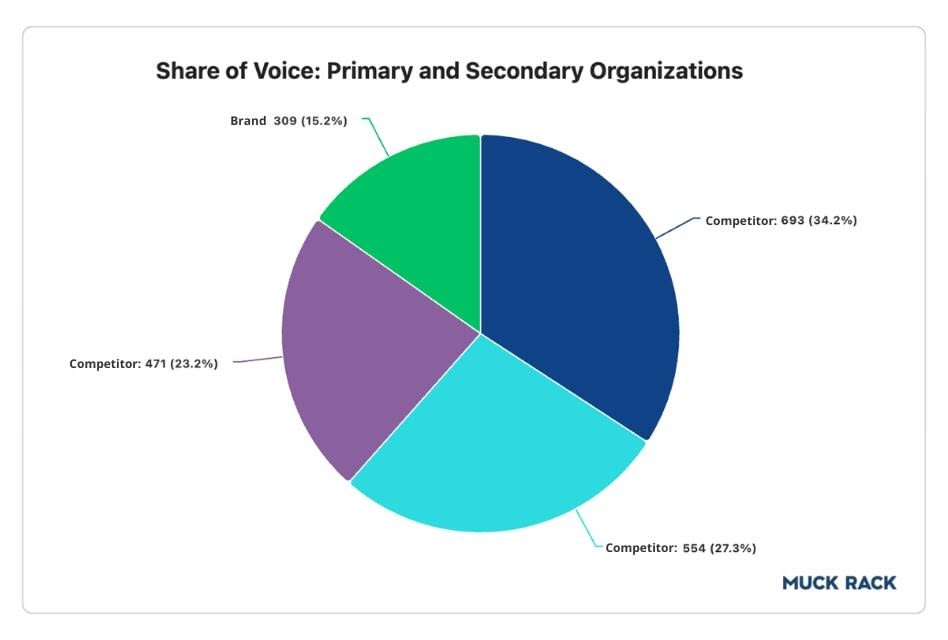
You can monitor up to 10 companies simultaneously. Your primary organization gets detailed tracking. The additional nine serve as competitive benchmarks. The system generates Share of Voice analysis showing exactly where you stand against competitors in AI-generated content.
The platform also tracks up to 10 keywords or topics. Feed in terms like “enterprise software,” “cybersecurity,” or “cloud infrastructure.” The system shows you how strongly your brand associates with these topics in AI responses. Pie charts break down mention distribution. You see which conversations you own and which ones competitors dominate.
Custom Prompts That Test What Matters
Generic monitoring tells you surface-level information. Generative Pulse lets you build a library of up to 100 custom prompts. You test the exact questions your stakeholders ask. “Who leads in sustainable packaging?” “Which companies are innovating in fintech?” “What brands are disrupting retail?”
The “Suggest prompts” feature analyzes your monitoring goals and selected organizations to recommend relevant questions. This saves hours of brainstorming while ensuring you’re testing scenarios that actually matter to your business.
Every prompt shows real-time responses from all three models. Click to expand, and you see the complete text each AI generated, plus the source citations they pulled from. Which domains did Claude reference? What articles did ChatGPT cite? This transparency reveals exactly which sources are shaping your AI narrative.
The Dashboard Makes Patterns Obvious
The analytics dashboard turns raw data into strategic intelligence through several visualization types.
The Average Visibility Score Matrix uses color-coded heatmaps to compare your organization against competitors across all three LLMs. Competitive positioning becomes immediately apparent. You spot which platforms favor you and which ones need work.
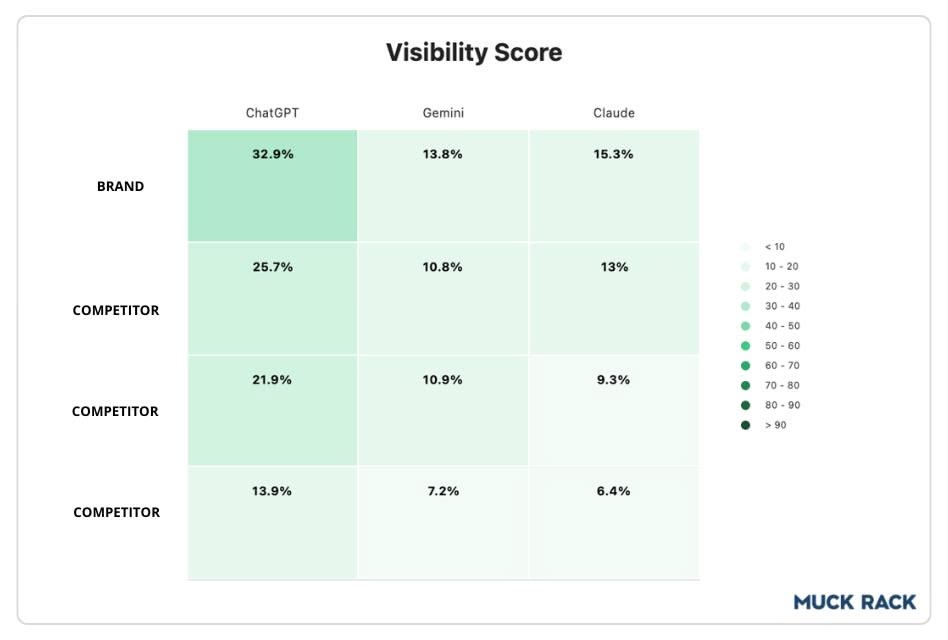
Visibility Over Time charts track daily scores with an average trendline. You watch how AI visibility fluctuates in response to news cycles, product launches, or PR campaigns. The line charts show all three LLMs separately so you can identify model-specific patterns.

Share of Voice charts quantify mention percentages across both organizations and keywords. You get pie chart breakdowns showing exactly what percentage of the conversation you own versus competitors.
Brand Mention Sentiment displays stacked bar charts breaking down positive, neutral, and negative sentiment over time. This adds emotional context to raw visibility numbers. You’re not just mentioned more often—you’re mentioned more favorably.

All visualizations export easily. You integrate this data into broader reporting frameworks and executive presentations without manual reformatting.
Where Generative Pulse Separates Itself
Every AI monitoring tool can tell you that your brand appeared in responses. Generative Pulse connects those appearances to the journalists and outlets that created the source material.
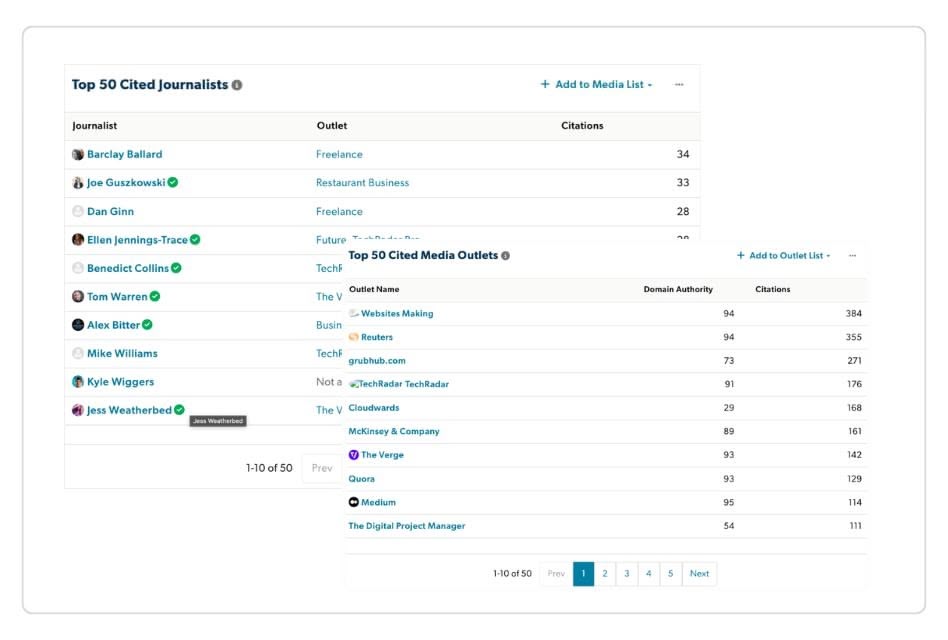
The “Top 50 Cited Journalists” section lists reporters being referenced by LLMs. Click any name and you get their full Muck Rack profile: current outlet, previous publications, contact information, recent articles, topics covered, and social media handles. The system shows coverage patterns like “Business service: 13 articles, Payment service: 9 articles.”
You see verification status through Muck Rack’s authentication system. Every profile includes a recent article portfolio with publication dates and outlets. And here’s the key feature: a one-click “Add to Media List” button sits right there in the dashboard.
You just discovered which journalists are shaping AI knowledge about your industry. Now you can immediately add them to your outreach lists. All without leaving the Generative Pulse interface.
The “Top 50 Cited Media Outlets” section works the same way. Publications appear ranked by citation count with Domain Authority scores attached. Each outlet links to its full Muck Rack profile: journalist rosters, coverage trends, and contact information. The “Add to Outlet List” button lets you build media targeting based on which publications actually influence AI training.
The “Top 100 Cited Domains” view gets more granular. You see specific websites referenced by LLMs with both total citations and unique URL counts. This reveals whether algorithms are citing diverse content from a domain or repeatedly pulling from the same few pages. Are you getting mentioned across multiple articles or is one piece carrying all the weight?
The “All Organization Mentions” table ranks companies by mention frequency with sparkline visualizations showing volume trends over time. Each entry includes weekly citation patterns. You can correlate PR activities with visibility changes and see which campaigns actually moved the needle in AI responses
How This Fits Into Your Existing Workflow
Generative Pulse sits inside Muck Rack’s broader platform alongside Media Database, Relationships, Monitoring, and Reporting. This placement matters because data flows between systems.
You access Muck Rack’s database of over 1 million journalist profiles and outlet information. Traditional media monitoring tracks your earned coverage. Reporting tools combine traditional PR metrics with AI visibility data into a single dashboard.
The journalist and outlet additions you make in Generative Pulse carry over to your main Muck Rack media lists. AI visibility insights inform your traditional PR outreach. Your earned media coverage influences future LLM training and responses. It’s a feedback loop where better placement in traditional media improves your AI visibility, which helps you identify better placement opportunities.
What This Means for PR Strategy
Traditional media monitoring only tracks published articles. Incomplete picture. More stakeholders, journalists, and consumers turn to AI assistants for information every day. You need to know what those assistants say about you.
Generative Pulse answers questions that traditional monitoring can’t. Which competitors dominate AI responses in your category? Are LLMs accurately representing your brand positioning? Which earned media placements actually influence AI knowledge? How does your AI visibility correlate with traditional coverage volume?
The integration with Muck Rack’s journalist database transforms these insights from interesting observations into relationship strategies. You know which journalists are being cited by LLMs. You prioritize outreach accordingly. You secure placements in high-authority publications that influence AI training. You build relationships with voices that shape both traditional and AI-mediated narratives.
Sentiment analysis provides early warning systems for reputation issues. Someone wrote something negative that’s now being cited repeatedly by ChatGPT? You know about it immediately and can respond.
Source tracking helps you understand your “citation portfolio.” Which domains and articles are shaping your AI presence? Are you over-reliant on a few sources? Do you need to diversify your earned media strategy to influence different LLMs differently?
Final Thoughts
Plenty of tools will track AI mentions. Generative Pulse does that while connecting those mentions back to the human journalists and media outlets that created the source material. That connection transforms monitoring into action.
You discover which publications and reporters influence AI knowledge about your industry. You add them to media lists with one click. You pitch them your story. They write about you in high-domain-authority outlets. Those articles become training data for the next model update. Your visibility improves. The cycle continues.
The platform provides proprietary visibility scoring, multi-LLM comparison, customizable prompt testing, and comprehensive source analysis. But the real value comes from integration with Muck Rack’s journalist database and relationship management tools. You’re not just monitoring AI. You’re influencing it through strategic earned media placement informed by which sources actually matter to the algorithms.
If you’re already using Muck Rack for traditional PR measurement, Generative Pulse extends that capability into the AI landscape. If you’re not using Muck Rack yet, this integration makes a compelling case for switching. The feedback loop between AI monitoring and journalist relationship management creates a complete workflow that standalone tools can’t match.
MORE POSTS ON GENERATIVE SEARCH (GEO)

Vuori Case Study: How Sentiment Analysis Varies Across AI Search

Managing Brand Reputation in Generative Search Requires PR Leadership

AI Search Has Become a Brand Reputation Channel

Five Blocks AIQ Review: Reputation Analytics vs Visibility

Gumshoe Review: The New Metric for Brand Visibility

Writesonic Review: Evaluating GEO Performance Metrics

Generative Search Citations: How Tech Media Outlets Shape AI Visibility

Earned Media is the New Currency of AI Search


